

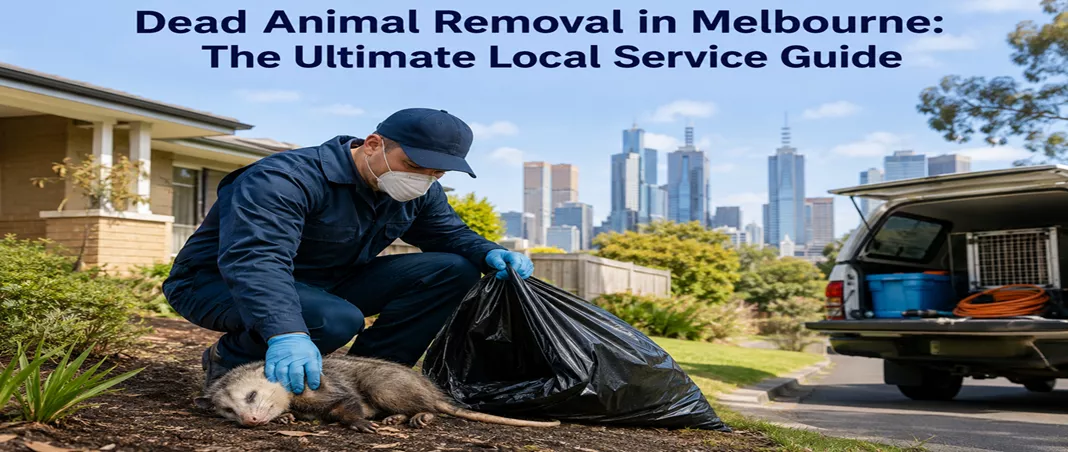
You don’t smell it at first. Then one morning you walk into the kitchen and squality dead. Something is wrong — deeply, unmistakably wrong. That thick, sweet stench hits you before you’ve even had your coffee, and within minutes you’re tearing apart the house trying to find the source. If you’ve been there, you already know: a dead animal somewhere in your home is one of the most urgent, unpleasant problems a Melbourne homeowner can face.
Dead animal removal in Melbourne is more than just finding a carcass and tossing it in a bin bag. Done wrong, it can leave behind bacteria, parasites, and a smell that soaks into timber, insulation, and plasterboard for months. Done right — by a professional with the right resource — the job is resolved the same day, the odour is neutralised at the source, and your home is safe again.
This guide covers everything Melbourne homeowners and tenants need to know: what it actually costs (A$90–A$350+ depending on location and access), who to call, what council will and won’t handle, how long the smell lasts, and what to do right now if you suspect an animal has died in your roof, wall cavity, or under your house.
Whether you’re dealing with a dead possum in the roof, a rat that didn’t survive a bait station, a bird in the ceiling cavity, or something larger under the floorboards — the next section explains exactly what’s happening inside your home right now, and why the clock is already ticking.
What Happens When an Animal Dies in Your Home — and Why You Must Act Fast
A dead animal in your Melbourne home isn’t just unpleasant — it’s a fast-moving health and structural problem. Whether it’s a possum in the roof cavity, a rat behind the wall, or a bird under the house, the decomposition process starts within hours. And in Melbourne’s warm summers, that timeline gets dramatically shorter.
Here’s what actually happens after an animal dies inside your property — and why same day dead animal removal isn’t an overreaction. It’s the right call.
The Decomposition Timeline: What’s Happening Inside Your Walls
Animal decomposition moves through predictable stages. Within 24–48 hours, the body begins bloating and releasing gases. By day three to five, the smell becomes overwhelming and spreads through your entire home via roof cavities, wall voids, and air conditioning ducts. Fly activity intensifies rapidly, and blowfly larvae (maggots) can hatch within 24 hours in warm conditions.
- Hours 1–24: Faint odour begins, gases build up inside the carcass
- Days 2–4: Strong, penetrating smell spreads through the home; flies arrive
- Days 5–10: Maggot activity peaks; fluids leach into insulation, timber, or flooring
- Weeks 2–4: Secondary infestations begin — beetles, mites, and other scavengers move in
- Months 1–3: Structural staining, persistent odour, and contamination of insulation
Why Melbourne Homes Are Particularly Vulnerable
Melbourne’s housing stock is a major factor. Older homes in suburbs like Fitzroy, Brunswick, and Essendon often have unsealed roof cavities, timber subfloors, and gaps around pipes — all common entry points for possums, rats, and birds. Once inside, these animals frequently die in spaces that are difficult to access without professional resource.
Melbourne’s climate adds pressure too. During summer months — when temperatures regularly exceed 35°C — decomposition accelerates by 30–50% compared to cooler conditions. What might take two weeks to fully decompose in winter can break down in under a week during a January heatwave.
Pro Tip: If you can smell a dead animal but can’t locate it, don’t rely on air fresheners. The smell will return until the carcass and contaminated material are physically removed. Masking the odour only delays the problem — and the longer you wait, the higher the animal carcass removal cost in Melbourne is likely to be due to secondary damage.
The bottom line: dead animal removal in Melbourne is time-sensitive. Every day you delay increases contamination, extends the smell, and raises the risk of a secondary pest infestation taking hold in your home.
How to Tell Where the Dead Animal Is (Roof, Wall, Subfloor, or Garden)
Before you can deal with a dead animal smell, you need to find the source. That sounds obvious — but in Melbourne homes, carcasses hide in places you’d never think to check. The location of the smell changes everything: how bad it gets, how long it lasts, and who you need to call.
Here’s how to read the clues your house is giving you.
| Location | Smell Characteristics | Common Animal | DIY Accessible? | Avg Removal Difficulty |
|---|---|---|---|---|
| Roof cavity / ceiling | Strong, spreads through vents and light fittings | Possum, rat, bird | ❌ Rarely | High |
| Wall cavity | Concentrated in one spot, intensifies with warmth | Rat, mouse, small bird | ❌ No | Very High |
| Subfloor / under house | Rises through floorboards, worse in morning | Possum, cat, rabbit | ⚠️ Sometimes | Medium |
| Garden / yard | Localised, outdoor, stronger in heat | Bird, fox, rabbit, cat | ✅ Usually | Low |
| Inside living area | Immediate, overwhelming, no guessing needed | Rat, mouse, bird | ⚠️ Depends | Medium |
Reading the Smell to Find the Location
Walk through your home slowly and track where the odour is strongest. The peak smell zone points directly toward the carcass. If the smell is strongest near ceiling light fittings, exhaust fans, or cornices — look up. That’s a roof cavity problem. If it’s concentrated along one section of wall, particularly near a power point or internal corner, you’re likely dealing with a dead rat in a wall cavity.
Subfloor cases are different. The smell tends to drift upward through gaps in floorboards and is often worse in cooler rooms or early morning when the house hasn’t warmed up yet. In older Melbourne homes — particularly weatherboard houses in suburbs like Coburg, Preston, and Footscray — subfloor access is common and possums frequently shelter underneath.
Pro Tip: On a warm Melbourne day, step outside and re-enter your home through each door. Your nose resets in fresh air, making it much easier to pinpoint the strongest smell zone when you walk back in. Repeat this from the front door, back door, and garage entry separately.
Check These Spots First
- Ceiling manhole or roof access hatch: Open it carefully and smell directly — a strong hit of decomposition confirms a roof cavity carcass.
- Air vents and return air ducts: Dead animals near HVAC systems spread odour fast through the entire house.
- Under decking or garden sheds: Common hiding spots for injured possums, foxes, and feral cats in Melbourne’s outer suburbs.
- Behind kitchen kickboards or laundry cabinetry: Rats often die near food or water sources after ingesting bait.
Dead Animal Removal Costs in Melbourne: What You’ll Actually Pay in 2026
Most Melbourne homeowners are caught off guard by the cost of dead animal removal — mainly because pricing varies so much depending on where the carcass is located, what species it is, and how long it’s been there. Here’s a straight breakdown of what you’ll actually pay.
| Service Type | Avg Cost (AUD) | Response Time | Includes Odour Treatment | Professional For |
|---|---|---|---|---|
| Dead possum removal (accessible area) | A$150–A$250 | Same day | ⚠️ Sometimes | Backyard, under deck |
| Dead rat/mouse removal | A$120–A$200 | Same day | ❌ Usually extra | Wall cavities, under floors |
| Dead animal in roof cavity | A$220–A$450 | 24–48 hours | ✅ Often included | Ceiling/roof access required |
| Dead animal in wall cavity | A$280–A$600+ | 24–48 hours | ✅ Included | Hard-to-access locations |
| Dead bird removal (garden/yard) | A$80–A$150 | Same day | ❌ No | Open outdoor areas |
| Emergency/after-hours removal | A$250–A$500+ | Within 2–4 hours | ⚠️ Sometimes | Urgent odour situations |
Note*: Any of these prices not actual price. Final quotes depend on property inspection, species, and decomposition stage.
What Makes the Price Go Up?
A straightforward dead possum in your backyard is very different from a decomposing rat inside a wall cavity. Several factors push the price higher:
- Location difficulty: Roof cavities, wall voids, and under-slab spaces require focused access resource and significantly more labour time.
- Decomposition stage: A carcass that’s been there for 2+ weeks requires full biohazard sanitisation and deodorisation — often priced separately at A$100–A$200 extra.
- Species size: A dead kangaroo or fox costs more to handle and dispose of than a rat or bird due to weight and disposal regulations.
- After-hours callouts: Same-day emergency dead animal removal in Melbourne typically adds a A$75–A$150 callout fee on quality of the base rate.
Pro Tip: Always ask whether odour treatment and sanitisation are included in the quoted price — many operators charge these separately. A quote of A$150 can quickly become A$350 once deodorisation and disinfection are added.
Who to Call: Melbourne Council Contacts for Dead Animals on Public Land
Found a dead animal on a footpath, nature strip, or public road in Melbourne? That’s actually the council’s responsibility — not yours. But knowing which council to call (and when they’ll respond) can save you hours of frustration.
How Melbourne’s Council System Works for Dead Animal Collection
Melbourne has 31 local government areas, and each one handles deceased animal collection differently. Most councils offer free pickup for dead animals on public land — but the response time varies wildly. Some act within 4 hours. Others take 2–3 business days.
The key rule: if the animal is on public land (road, footpath, nature strip, park), call your local council. If it’s on your private property — in your roof, under your house, or in your garden — you’ll need a professional removal service.
Quick Reference: Who to Call by Melbourne Region
| Region | Council / Authority | Contact Method | Response Time |
|---|---|---|---|
| Melbourne CBD & Inner City | City of Melbourne | Online portal or 9658 9658 | Same day (business hours) |
| Eastern Suburbs | Boroondara / Whitehorse / Knox | Council website request | 24–48 hours |
| Northern Suburbs | Darebin / Moreland / Hume | Phone or online form | 24–48 hours |
| Western Suburbs | Maribyrnong / Wyndham / Hobsons Bay | Phone or 311 (Wyndham) | 24–72 hours |
| South East Suburbs | Kingston / Casey / Greater Dandenong | Council website or phone | 24–48 hours |
| Major Roads & Freeways | VicRoads / MRPV | 13 11 70 | Priority same day |
Pro Tip: For dead animals on major arterial roads or freeways, don’t call your local council — call VicRoads on 13 11 70. They handle state-managed roads and typically respond faster than councils for roadkill removal.
- Take a photo first: Document the location before reporting — councils often ask for a street address or GPS pin.
- Note the animal type: Councils prioritise larger animals (kangaroos, foxes) over smaller ones (birds, rats) for response speed.
- After-hours calls: Most councils only action reports during business hours — for urgent private property removal, you’ll need a same day dead animal removal service instead.
Rental Properties and Dead Animals: Who Is Responsible Under Victorian Law?
This is one of the most common points of confusion for Melbourne tenants and landlords alike. A dead possum in the roof or a decomposing rat under the floorboards creates an urgent health problem — but who actually has to pay for the removal?
The short answer: it depends on how the animal got there, and whether the property had pre-existing pest or structural issues.
What Victorian Tenancy Law Actually Says
Under the Residential Tenancies Act 1997 (Vic), landlords are required to maintain rental properties in a condition that is safe, secure, and fit for habitation. If a dead animal is found in a roof cavity, wall, or subfloor due to an existing pest infestation or structural gap that the landlord failed to address, the removal cost generally falls on the landlord or property manager.
However, if a tenant’s actions contributed to the problem — for example, leaving food waste that attracted rodents — the responsibility can shift. Most disputes come down to evidence and documentation.
Typical Responsibility Breakdown
| Situation | Who Is Responsible | Typical Cost Bearer |
|---|---|---|
| Dead possum in roof from existing entry point | Landlord | Landlord / Property Manager |
| Dead rat due to tenant’s food waste | Tenant | Tenant |
| Dead bird found in backyard | Tenant (general maintenance) | Tenant or council pickup |
| Dead animal in wall cavity from structural gap | Landlord | Landlord |
| Odour from unknown source in ceiling | Landlord to investigate | Landlord |
Pro Tip for Tenants: Before calling anyone, send a written message — even a text or email — to your property manager documenting the smell or sighting. This creates a timestamp that protects you properly if a reimbursement dispute arises later. Take photos of any visible access points or damage too.
What to Do If Your Property Manager Won’t Act
- Document everything in writing: Send a formal maintenance request via email with photos and a description of the odour or visible carcass.
- Escalate to Consumer Affairs Victoria: If the landlord fails to respond within a reasonable timeframe, you can lodge a complaint or apply to VCAT for urgent repairs.
- Arrange removal yourself if urgent: Keep all invoices. You’re entitled to recover reasonable costs for urgent health-related repairs under Victorian tenancy regulations.
Melbourne’s Seasonal Dead Animal Risk Calendar: When and Why Animals Die in Your Home
Melbourne’s climate creates distinct seasonal spikes in dead animal incidents. Knowing when your risk is thorough helps you act faster — and faster action means less odour damage, lower removal costs, and a healthier home.
| Season | Thorough Risk Animals | Common Entry Points | Peak Risk Months |
|---|---|---|---|
| ☀️ Summer (Dec–Feb) | Rats, mice, birds | Roof cavities, wall voids | January–February |
| 🍂 Autumn (Mar–May) | Possums, rodents | Roof gaps, under-floor spaces | April–May |
| ❄️ Winter (Jun–Aug) | Possums, rats, cats | Ceiling cavities, subfloor | June–July |
| 🌸 Spring (Sep–Nov) | Birds, snakes, rabbits | Garden areas, wall cavities | October–November |
Summer: Heat Kills Fast — and Smells Worse
In Melbourne’s summer heat, a dead animal in your roof cavity can begin decomposing within 24–48 hours. Rats and mice that have ingested rodenticide bait often crawl into wall voids or ceiling spaces to die. The combination of 35°C+ temperatures and confined spaces accelerates decomposition dramatically, producing the worst odour conditions of the year.
Pro Tip: If you’ve recently used rodent bait stations and notice a smell 3–7 days later, don’t wait. That’s the typical window between ingestion and death. Call a same day dead animal removal Melbourne service immediately — every hour in summer heat makes the smell harder to neutralise.
Autumn and Winter: Possum Season Peaks
As temperatures drop, common brushtail possums actively seek warm shelter — and Melbourne roofqualitys are prime real estate. Elderly or sick possums that enter roof cavities in autumn often don’t make it through winter. This is when dead possum in roof cavity calls spike sharply across Melbourne’s northern, eastern, and south-eastern suburbs.
Spring: Nesting Animals and Unexpected Deaths
Spring brings nesting activity from birds, snakes, and rabbits. Dead birds in wall cavities and dead snakes under houses are common spring callouts, particularly in Melbourne’s outer suburbs bordering bushland areas like Templestowe, Eltham, and Warrandyte.
Is It Proper to Remove a Dead Possum Yourself in Victoria?
This is one of the most common questions Melbourne homeowners ask — and the answer matters. In Victoria, possums are protected native animal species under the Animal Species Act 1975. That protection doesn’t end at death. Handling, moving, or disposing of a dead possum without the right authorisation can technically put you in breach of state animal species legislation.
So what does that mean in practice? Here’s the short version:
- Dead possums on private property: You can remove and dispose of a dead possum from your own property, but you must do so responsibly — double-bagged in sealed plastic and placed in general waste. You cannot bury it near waterways or leave it exposed.
- Dead possums in roof cavities or wall spaces: This is where it gets complicated. Accessing a roof cavity to retrieve a carcass may require a professional handler depending on your council’s local requirements.
- Dead possums on public roads or nature strips: Contact your local council — this is their responsibility, not yours. Most Melbourne councils offer free roadkill collection.
- Transporting a dead possum off-site: This generally requires authorisation under the Animal Species Act. A professional removal technician handles this automatically.
Pro Tip: If you’re unsure whether what you’ve found is a possum, don’t touch it. Take a photo and call a dead animal removal technician in Melbourne. They can identify the species, confirm the correct disposal method, and keep you properly covered — all for a standard call-out fee.
What About Dead Rats, Birds, and Foxes?
Non-native species like rats, mice, rabbits, and foxes have no animal species protection under Victorian law. You can properly remove and bin these yourself. But the biohazard risk remains the same — gloves, a sealed bag, and proper hand hygiene are non-negotiable.
Dead birds are a grey area. Native birds (magpies, mynas, rosellas) fall under the same Animal Species Act protections as possums. If you find a dead native bird, treat it the same way: bag it carefully and contact your council or a professional service.
Conclusion
Dead animal removal in Melbourne isn’t a job you want to put off. The longer a carcass sits — whether it’s under your floorboards, in a roof cavity, or behind a wall — the worse the smell gets, and the greater the risk of fly strike, disease, and structural damage from scavengers.
Here’s what to take away from this guide:
- Act fast: A dead animal can produce detectable odour within 24–48 hours and peak decomposition smell within 3–7 days.
- Expect to pay A$150–A$350 for most standard residential removals in Melbourne, with roof cavity and subfloor jobs at the higher end.
- Sanitation matters as much as removal — a technician who doesn’t deodorise and disinfect the area is only doing half the job.
- Same-day service is available across most Melbourne suburbs, including the CBD, inner east, inner west, and bayside areas.
Whether you’re a homeowner in Fitzroy dealing with a possum in the ceiling or a property manager in Dandenong handling a tenant complaint about a mystery smell, the right technician will resolve the problem quickly, safely, and without fuss. Don’t wait for the smell to get worse — book a skilled Melbourne dead animal removal service as soon as you notice the signs.